
This is another comment coming in the wake of my recent visit to Fogo Island for Shore Time — a gathering to discuss design, art, place [Link] [Link] It’s about the wonderful architecture of Todd Saunders [Link]. More matters of hospitality, of hosts, visitors, and the ghosts that can haunt their meeting. At Shore Time,…
posts

Times Places Things — Fogo Island, Newfoundland
A previous post on this site mentioned a recent visit I made to Fogo Island [Link] — and where I found myself revisiting matters I had raised in a book of mine — Heritage Performance Design (2019) [Link]. Here are more comments and thoughts that have arisen after this extraordinary gathering. See also my thoughts…

basement
Museum of Classical Archaeology, Peterhouse, Cambridge 1977.
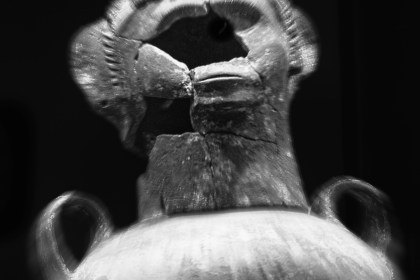
Etruscan
Burial urn. Etruscan 7th or 6th century BCE. Glyptotek, Copenhagen.

Fogo Island — field notes on design, place, community
I have just returned from a fascinating gathering on Fogo Island, Newfoundland, Canada — Shore Time [Link], organized by Fogo Island Arts, a part of Shorefast [Link], the social enterprise founded by Zita Cobb in 2006 to build economic and cultural resilience on the island. Speakers and hosts were Kitty Scott, Leonor Antunes, Tom McDonough,…

Palmyra in the (archaeological) north
More legacies of antiquity, reworkings of what remains. Displacements. Funerary portraits. Loss and the burden of interpretation. I have been posting some photographs of statues from the extraordinary collections in the Glyptotek in Copenhagen. The museum also holds a large collection of funerary reliefs from ancient Palmyra, the oasis city in Syria that once served as…